April 30, 2026 | Atlanta, GA
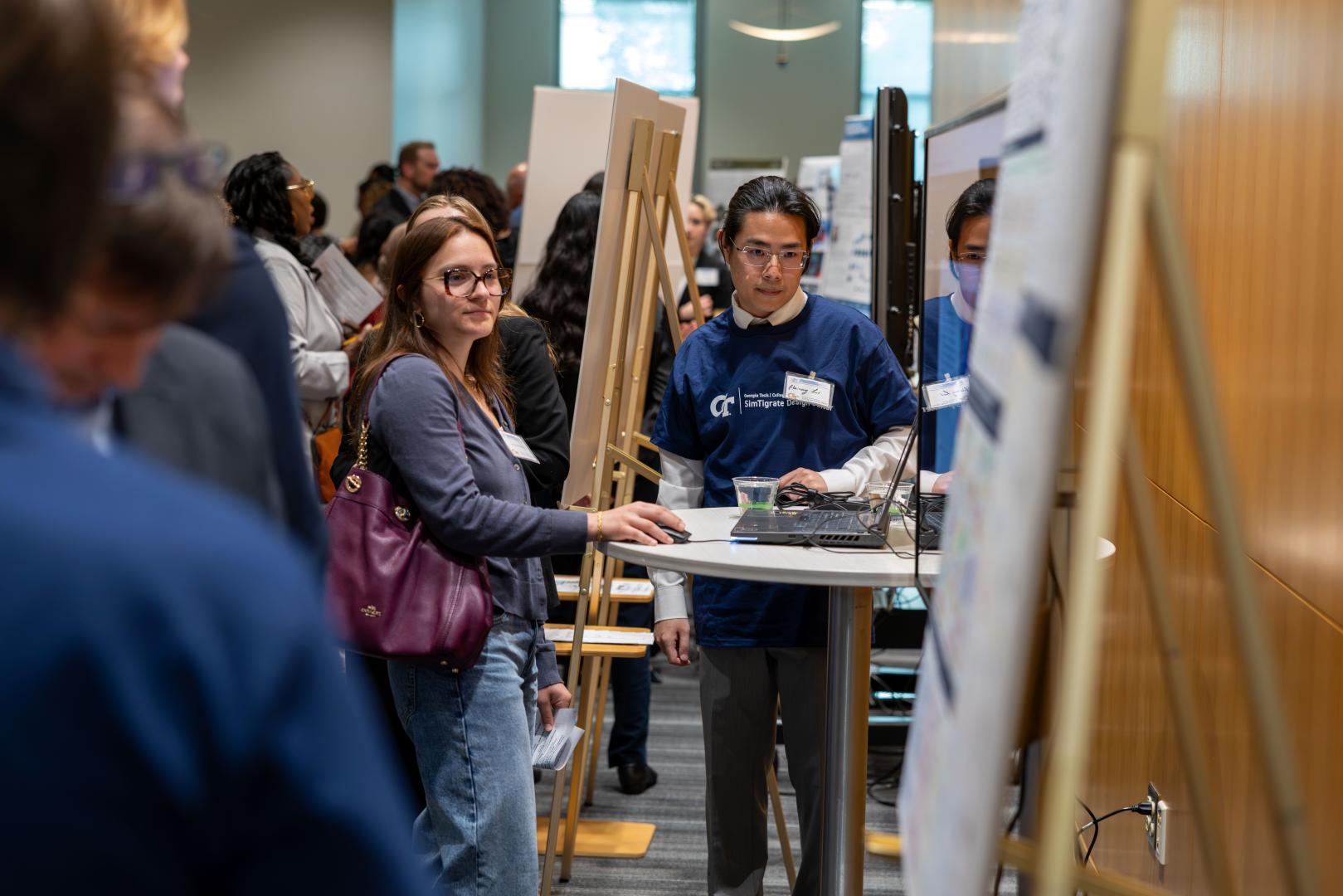
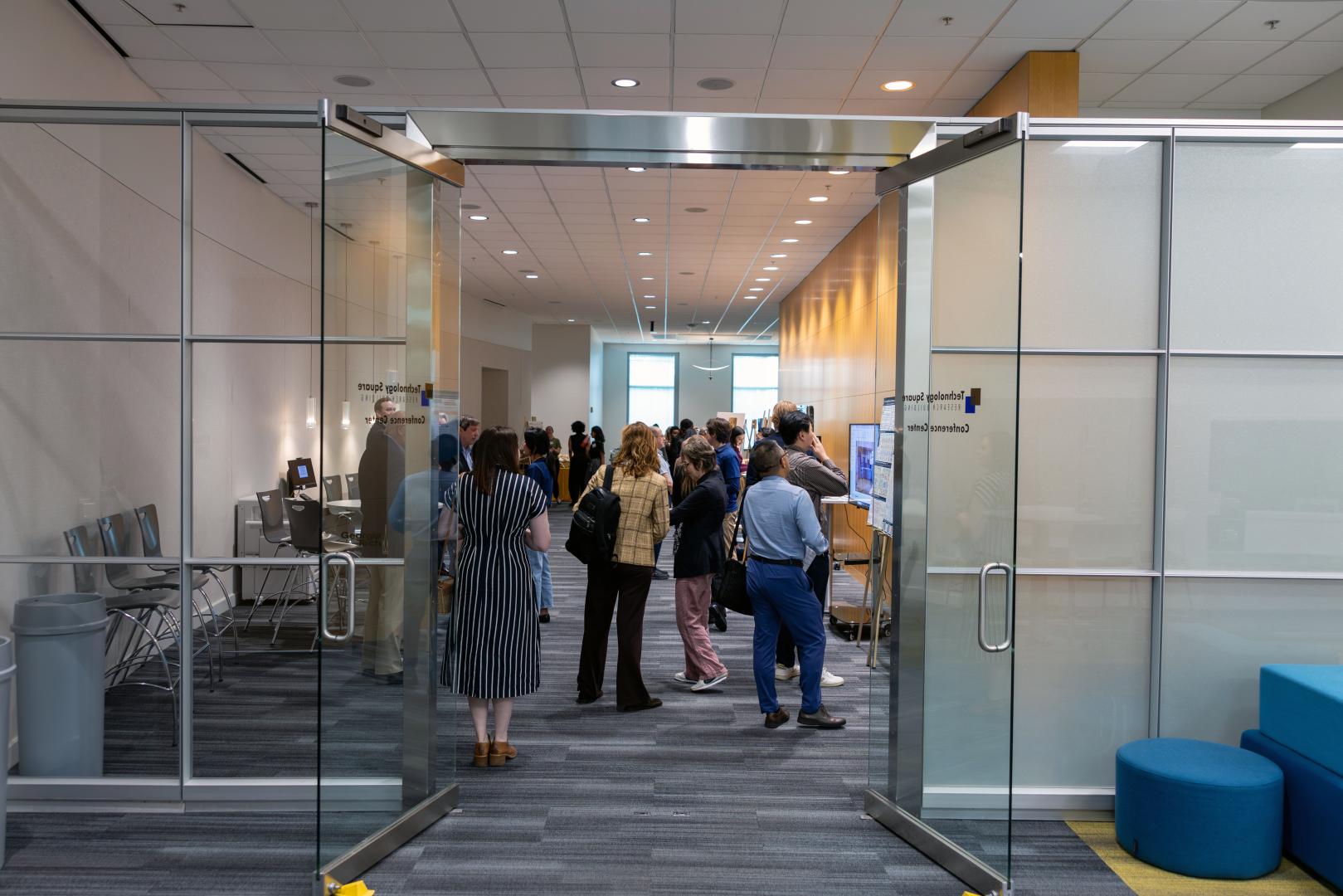
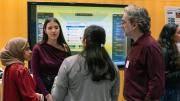
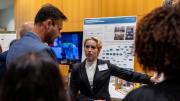
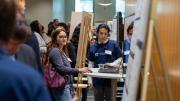
During the SimTigrate Open House 2026, students, faculty, and researchers presented innovative, interdisciplinary work exploring how design can better connect hospital and home, support healthy aging, and advance evidence-based healthcare environments. The event featured two showcases: the 2026 Healthcare Design of the Future (HCDF) Student Projects Showcase, themed "Better Connecting Hospital and Home," and the SimTigrate Design Center Faculty and Ph.D. Student Research Showcase. This year's event brought together smart home technology, assistive technology, accessible design principles, and cutting-edge research to imagine more supportive and empowering futures for patients, caregivers, and care environments. In collaboration with domain experts, student teams and researchers developed forward-thinking solutions aimed at improving quality of life, supporting caregivers, and strengthening the continuum of care beyond traditional clinical settings.
2026 Healthcare Design of the Future (HCDF)
Student Projects Showcase
The HCDF course introduced students to research-based approaches to integrated healthcare design innovation. Designed as an interdisciplinary offering across both undergraduate and graduate levels, the course guided students through the basic components of healthcare facilities and the key issues surrounding their design and research. Students examined the basis of evidence-based design, including its core principles, key findings, and its differences from other design models. They then analyzed health care environments utilizing evidence-based, data-driven approaches that integrate the clinical process and technology with design. Working in multi-disciplinary teams, students developed collaborative, innovative design solutions to address specific healthcare challenges.
This year's projects highlight two key populations:
- Technology Dependent-Children (TDC) whose intensive medical needs shift from hospital settings into the home
- Stroke survivors navigating complex physical, cognitive, and emotional recovery
During this semester, students took on an exciting challenge: reimagining how design can better support stroke survivors, TDC patients, and their care partners—bridging the gap between hospital and home for healthier, more empowered living, and reshaping the future ecosystem of health, healing and home. Interdisciplinary student teams collaborated with domain experts to design forward-thinking solutions that integrate smart home technology, assistive tech, and accessible design principles. Their work aims to improve quality of life, support caregivers, and strengthen the continuum of care beyond traditional clinical settings.
HCDF Class Projects: Technology-Dependent Children
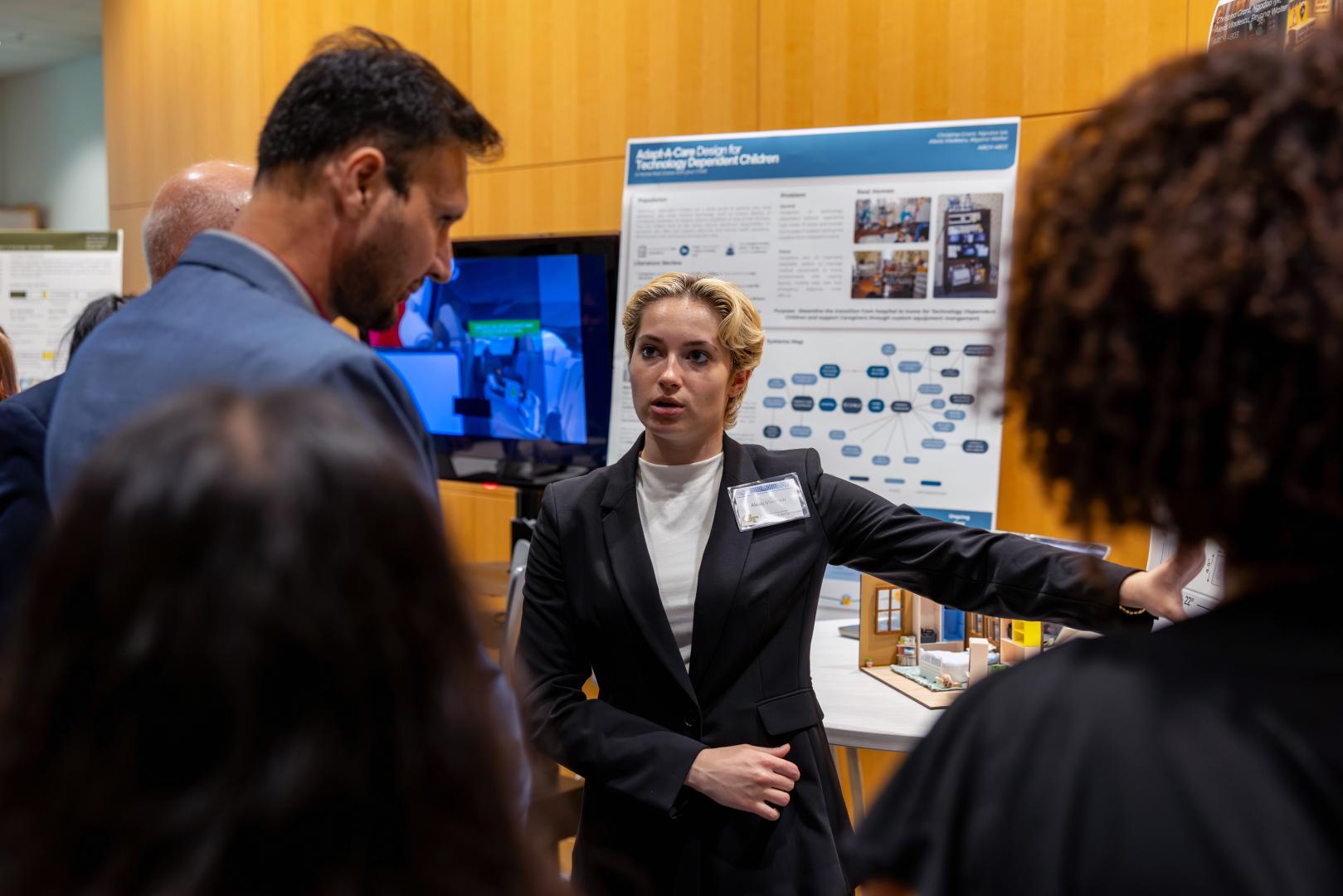
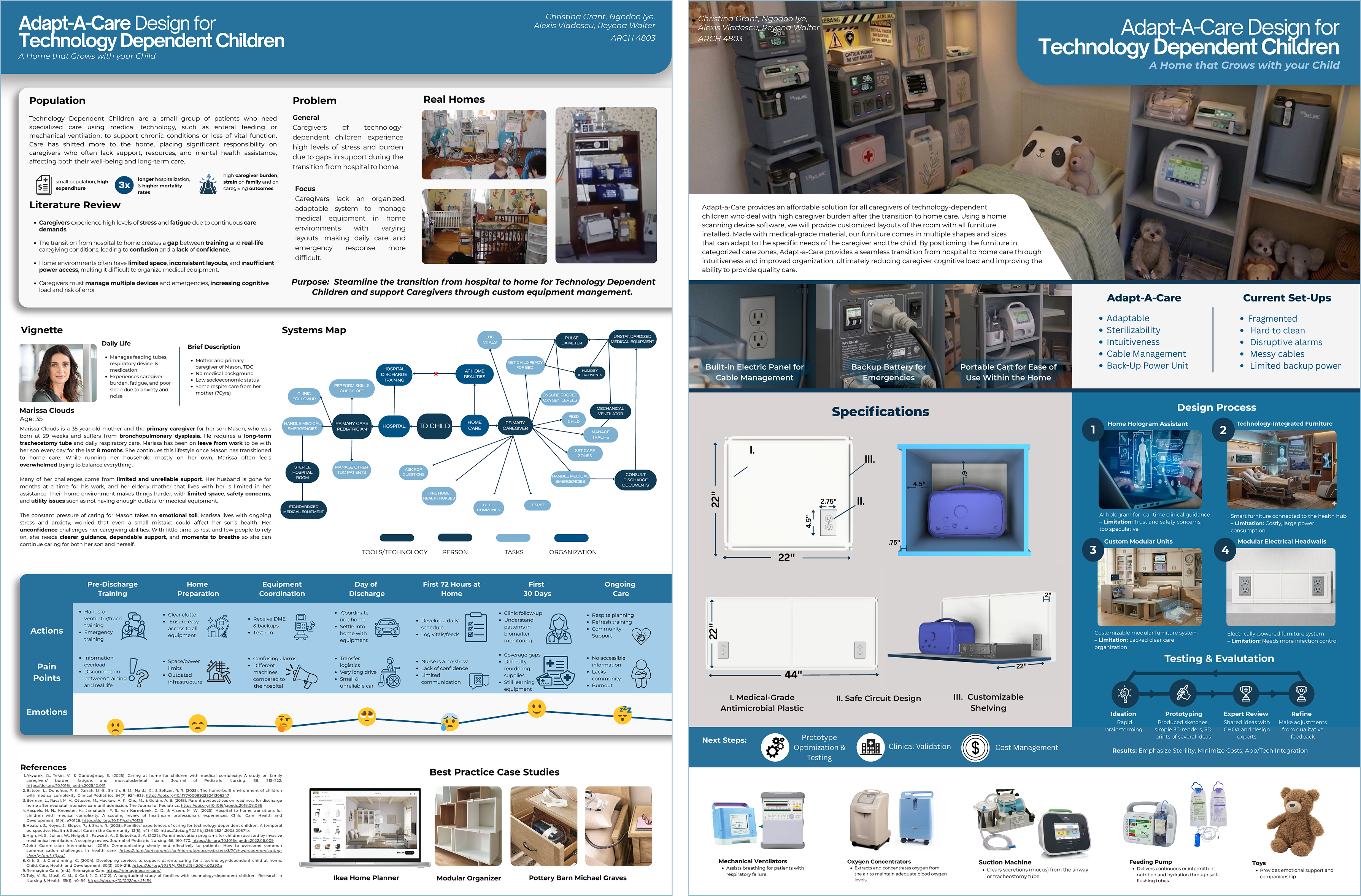
Project 1: Adapt-A-Care
Christina Grant (BMED), Alexis Vladescu (BMED), Reyona Walter (BMED), Ngodoo Iye (Industrial Design)
Adapt-a-Care provides an affordable solution for all parents of technology-dependent children who deal with high caregiver burden after the transition to home care. Using a home scanning device software, Adapt-a-Care will provide customized layouts of the room with all furniture installed. Made with medical-grade material, our furniture comes in multiple shapes and sizes that can adapt to the specific needs of the caregiver and the child. By positioning the furniture in categorized care zones, Adapt-a-Care provides a seamless transition from hospital to home care through intuitiveness and improved organization, ultimately reducing caregiver cognitive load and improving the ability to provide quality care.
Project 2: PathSafe
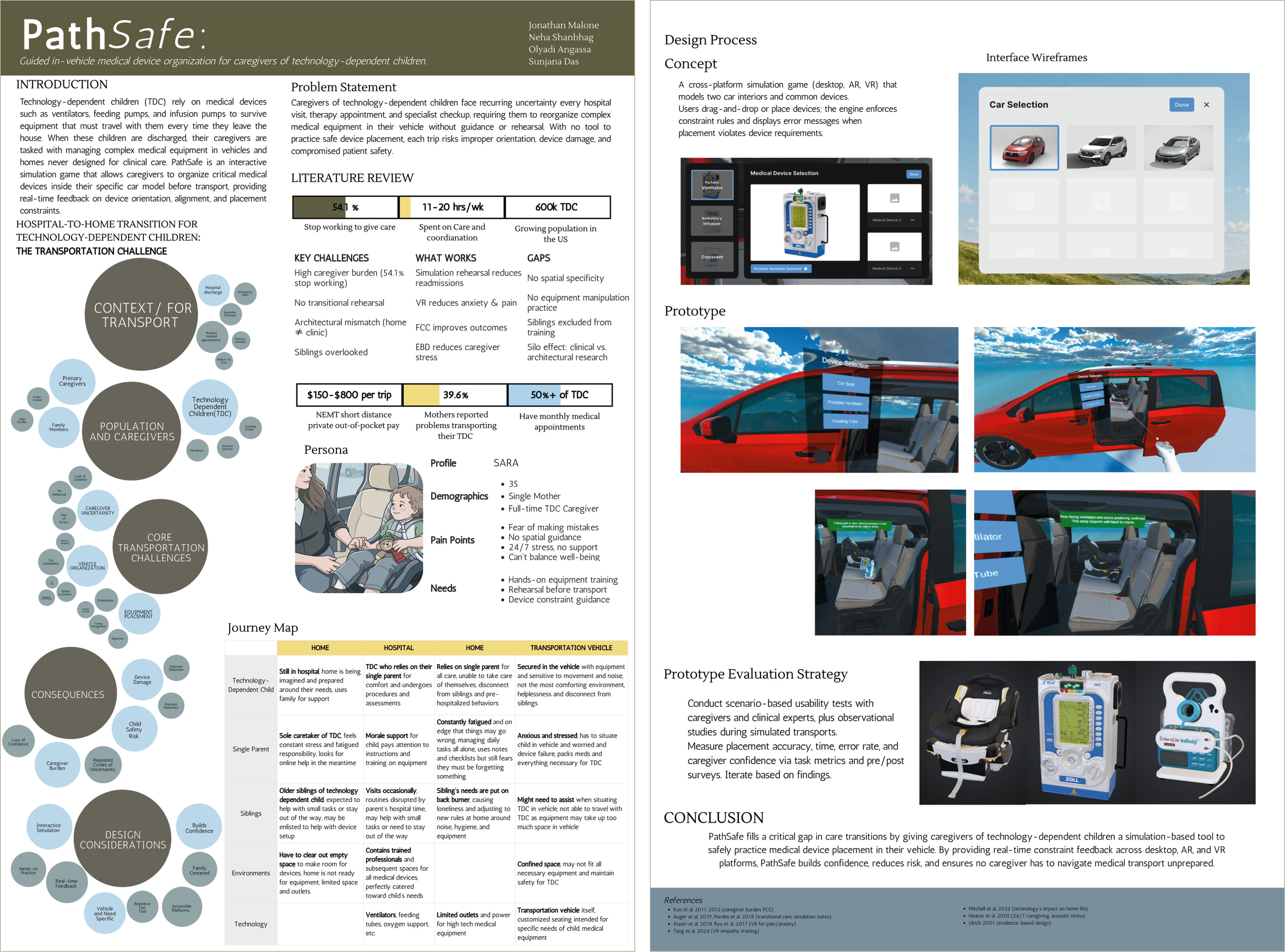
Sunjana Das (BMED), Jonathan Malone (BMED), Neha Shanbhag (Computational Media), Olyadi Angassa (ARCH)
PathSafe is a resource that provides guided in-vehicle medical device organization for caregivers of technology-dependent children. It is an interactive simulation game that guides caregivers to securely place critical devices inside specific car models before TDC transport, allowing them to visualize the fit and placement of the devices in their specific car before actual transportation. PathSafe features a vast array of car makes and models to choose from, as well as a comprehensive spectrum of medical devices that fit a wide range of TBC needs. The hope with PathSafe is that it reduces post-discharge tension by providing immediate feedback on device orientation, alignment, and placement constraints through desktop, AR, or VR interfaces.
Project 3: CarePods
Andrea Lopez (BMED), Ainsley Clayton (BMED), Garima Kaushik (ARCH), So Yeon Lee (ARCH)
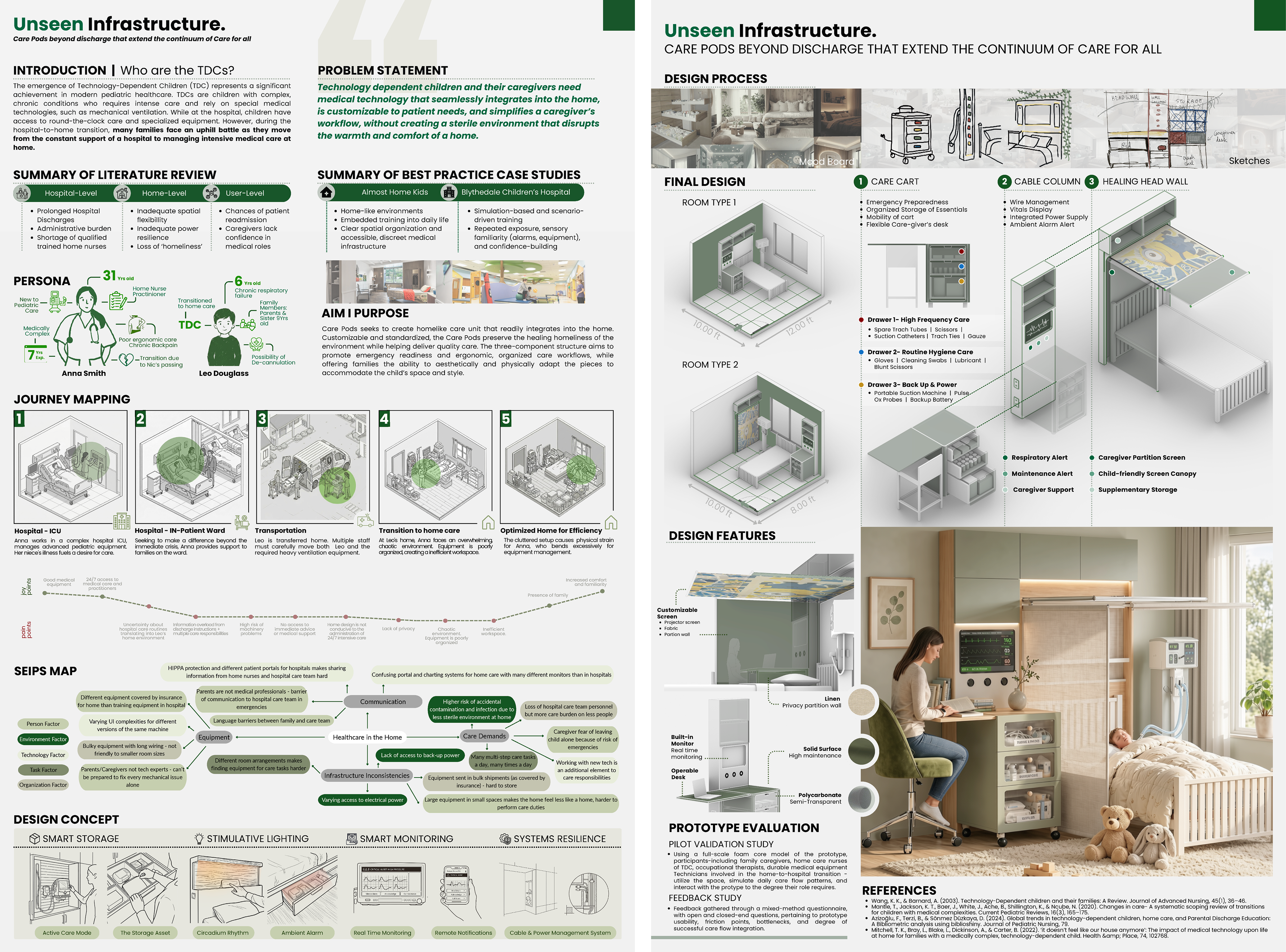
CarePods cultivates the experience of hospital-level care within the comfort of the home for both the patients and caregivers that rely on it. Each technology-dependent child's situation is complicated and unique, and the transition from the safe sterility of the hospital to homes that are not fully equipped for care can be frightening. The CarePod is designed to create consistency for the care hub around the child's bed, regardless of the setup of the child's home. This aids caregivers by providing a standard home care set, which reduces the burden of care, while also increasing child safety with easy and intuitive access to essential tracheostomy supplies. The CarePod is comprised of three components. The HeadWall balances biophilic design elements, ambient lighting and alert systems, and a retractable canopy to create a healing "pod" for the child, while also being the central hub for biometric data and quick storage for materials for routine procedures. The Power Column centralizes the cable storage for all medical devices and monitoring equipment in a discrete manner, while also protecting them from damage; the cables being stored out of sight eliminates the eerie feeling of being surrounded by medical wires in a child's bedroom. Lastly, the CareCart is a mobile emergency care station containing all necessary supplies for a tracheostomy emergency or mobile care, for use throughout the home, on the go, and any time in between.
HCDF Class Projects: Stroke Survivors
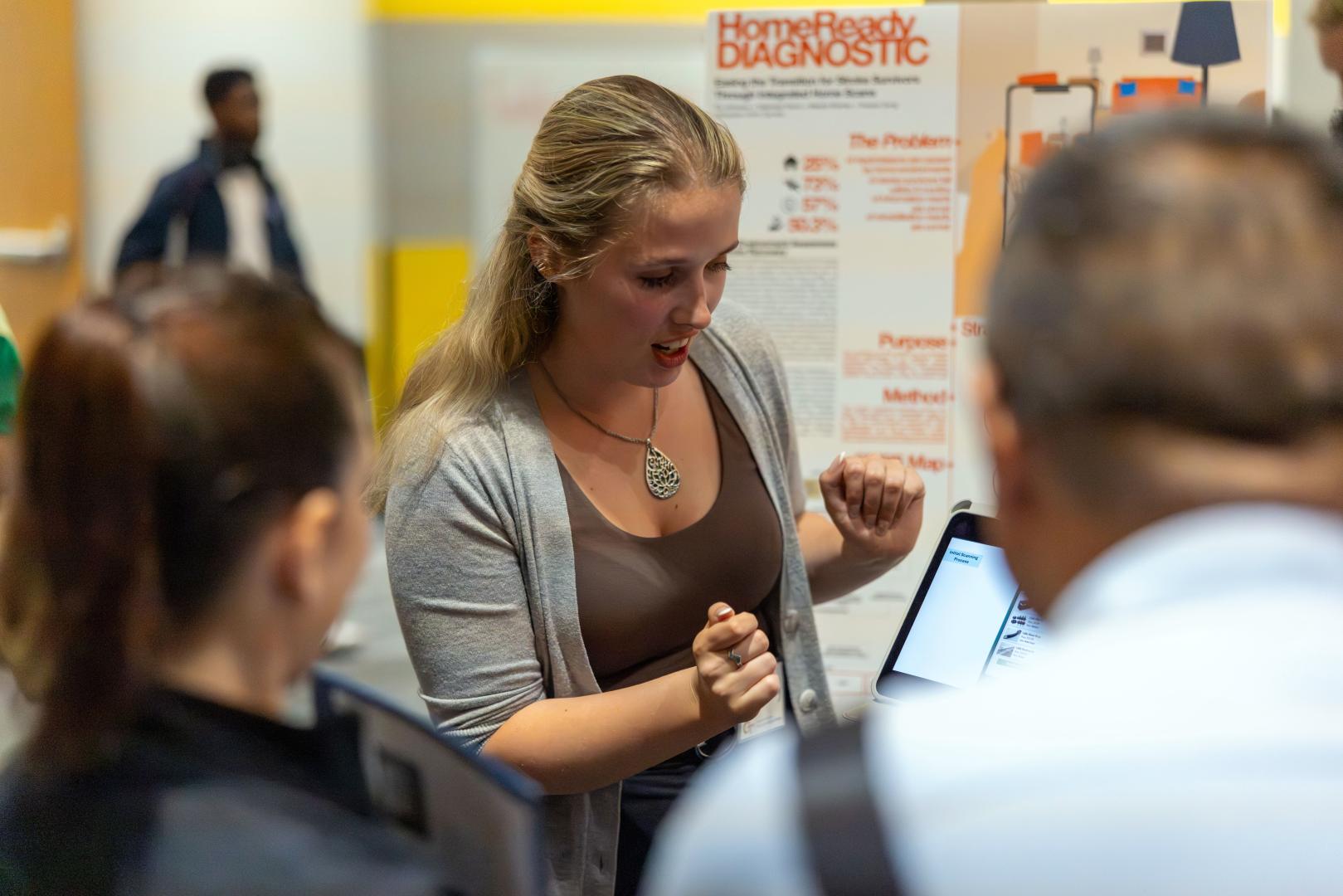
Project 4: HomeReady Diagnostics
Tia Johnson (ARCH), Maisie Worley (BMED), Xuanyi Zeng (Operations Research), Gabriela Parra (ARCH)
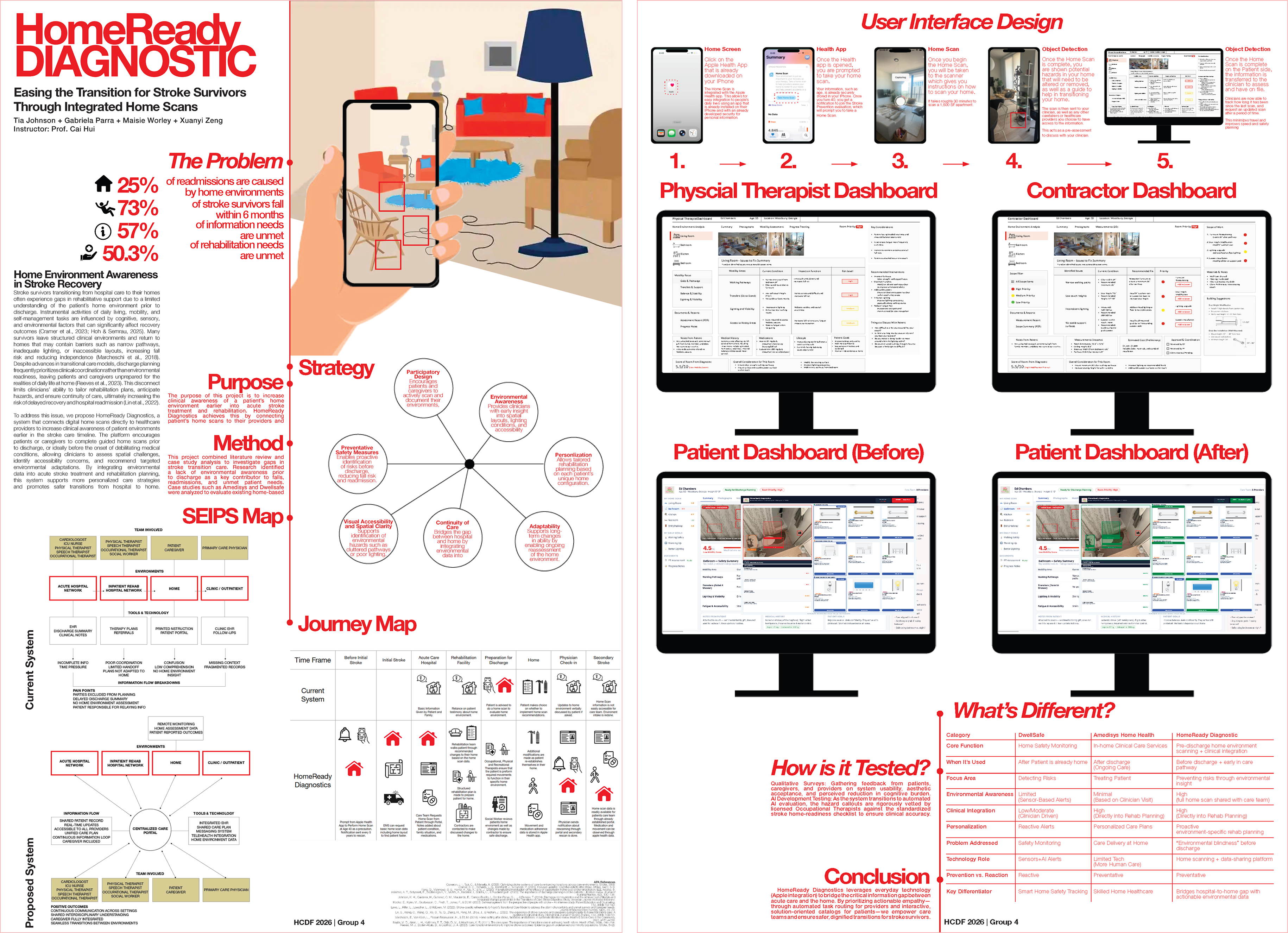
HomeReady Diagnostics equips care teams with detailed, shareable insights into the home environments of stroke survivors, supporting more coordinated and informed care. By using advanced home-scanning technology in collaboration with occupational therapists, the platform identifies environmental features that may require modification or further evaluation as patients continue their rehabilitation at home. The resulting data is tailored and distributed to different members of the interdisciplinary care team, ensuring each professional receives the most relevant information for their role.
Project 5: PLATE
Lauren Callaway (Health Systems), Haitong Li (ARCH), Cooper Stone (Health Systems), Breno Veiga (ARCH)
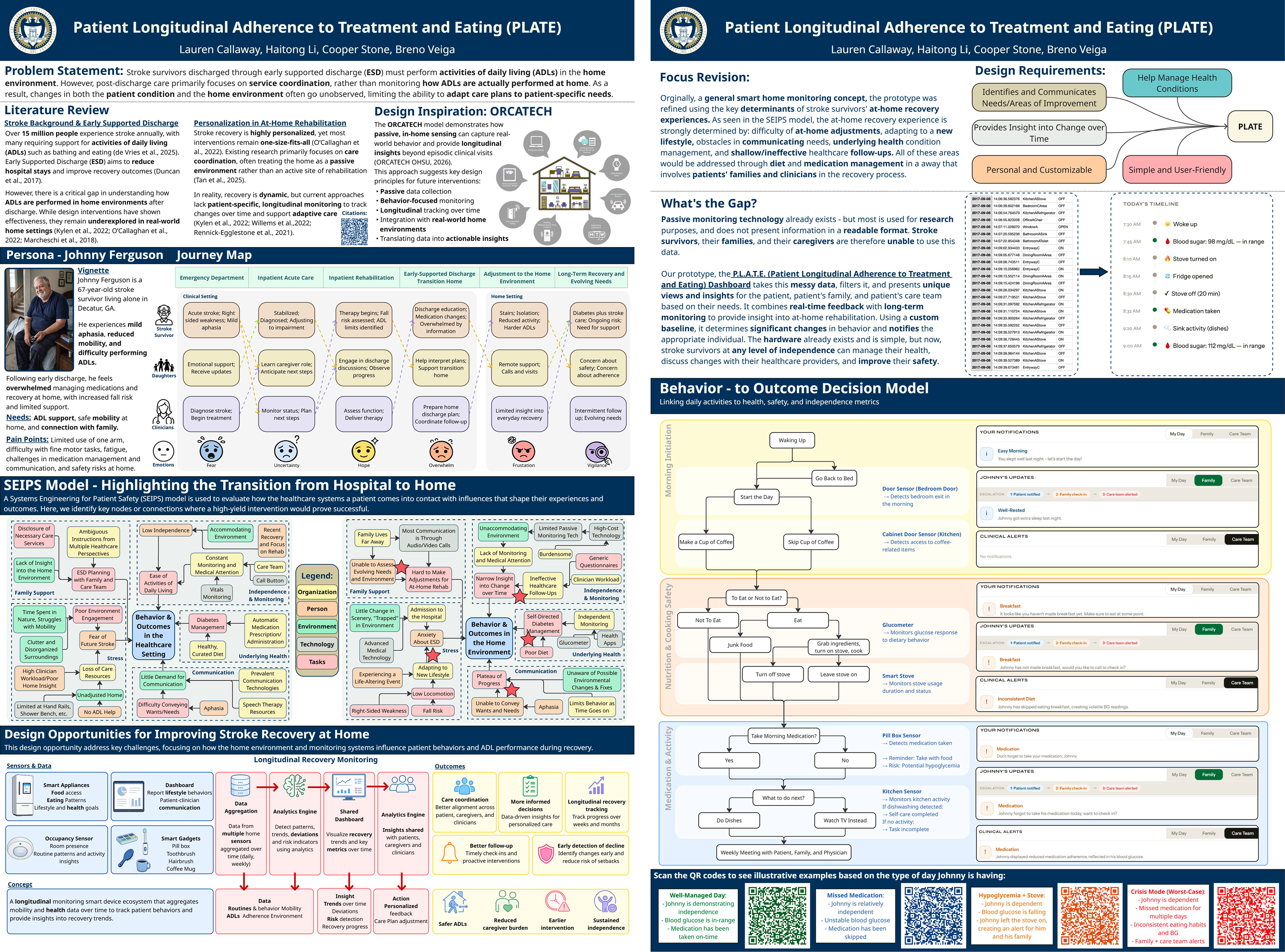
Project PLATE (Patient Longitudinal Adherence to Treatment and Eating) consists of a dashboard that is integrated with passive monitoring technologies installed within the home. Stroke survivors undergo dynamic rehabilitation while living at home, and many have changes in independence that may not be fully captured without longitudinal monitoring. Additionally, after discharge home, there is often a limited flow of information from patients and their families to their care team due to infrequent medical check-ins and generalized checklists/questionnaires. For stroke survivors that want to independently manage a healthy lifestyle while undergoing treatment, PLATE steps in by using data from passive monitoring technologies (smart fridge, stove sensor, motion detectors, medication sensors) to create clear insights. These are presented in a cohesive dashboard with different views for the patient, their family, and their care team, based on each stakeholders' needs. Timely notifications appear for day-to-day activities, while trends in hygiene, independence, diet, and blood sugar are summarized in simply graphs. It current works in reading raw csv data from CASAS datasets and creating clean, easy-to-read events modeled after individuals' daily activities.
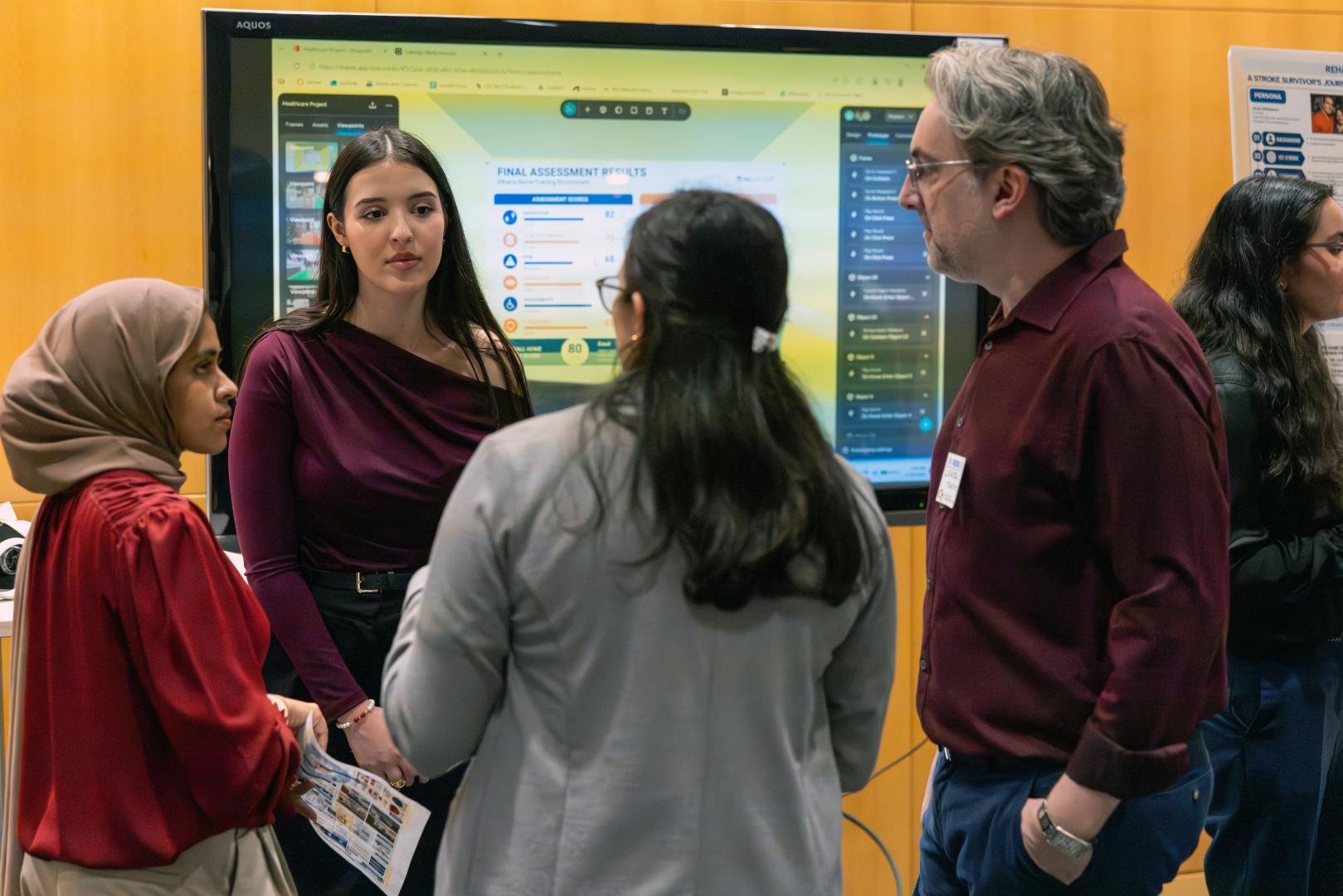
Project 6: ReHabit VR
Karen Netto (BMED), Dina Abdel (ARCH), Ramisa Tasnim (ARCH)
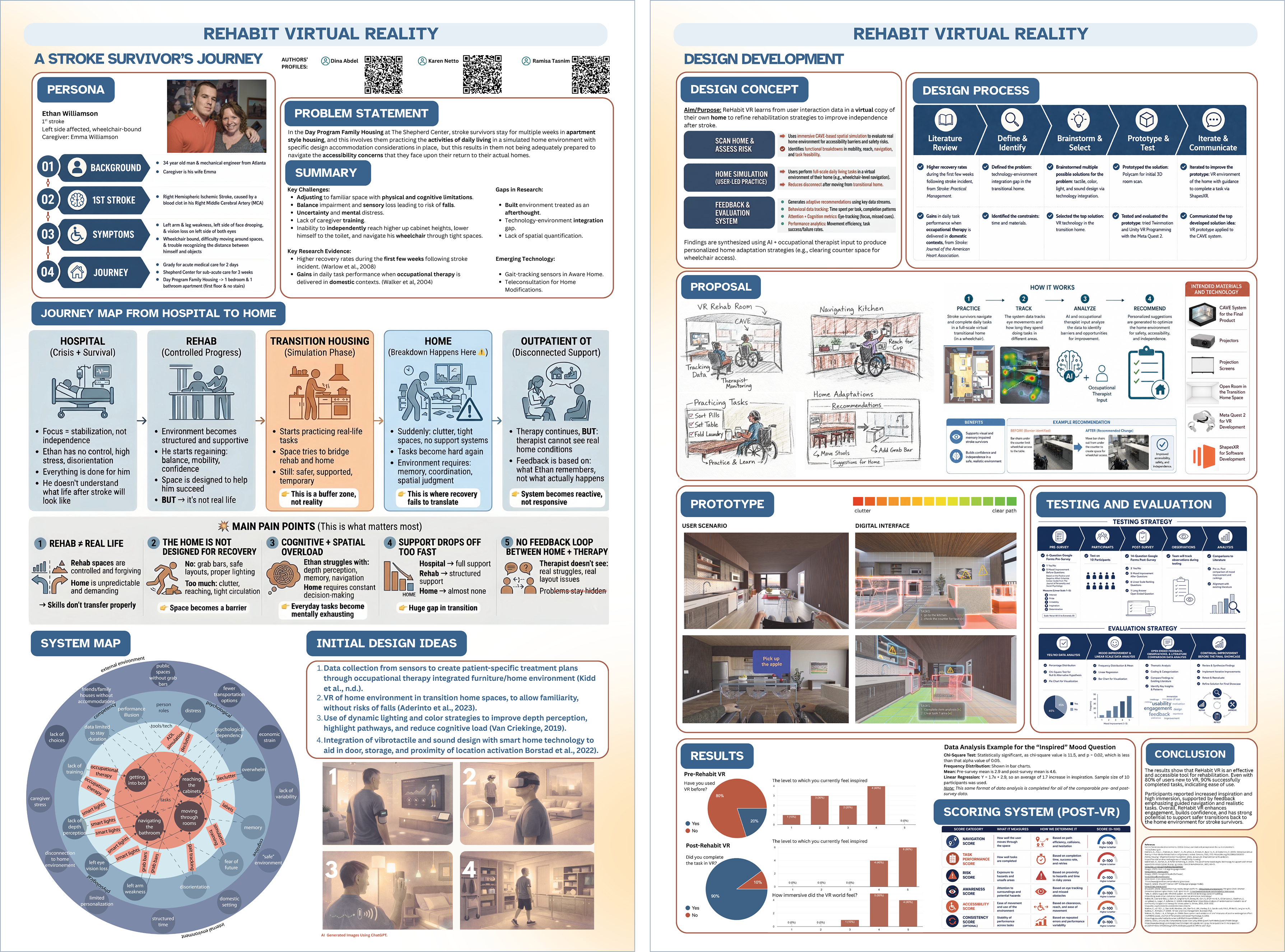
ReHabit VR is focused on Post-Stroke Living Readiness: Cave Automatic Virtual Environment (CAVE) for Cognitive and Functional Rehabilitation in the Transitional Home. In the Day Program Family Housing at The Shepherd Center, stroke survivors stay for multiple weeks in apartment style housing, and this involves them practicing the activities of daily living in a simulated home environment with specific design accommodation considerations in place, but this results in them not being adequately prepared to navigate the accessibility concerns that they face upon their return to their actual homes. The solution is an immersive environment in the transitional home where stroke survivors can practice daily tasks at full scale (like in a wheelchair in the CAVE), which benefits visual and memory impaired stroke survivors. CAVE is a form of Virtual Reality (VR), and ReHabit VR is focused on both rehabilitation and the relearning of habits for stroke survivors. As they navigate the environment, it will data track their eye movements and how long they spend doing certain tasks in different areas. Then, ReHabit VR will use AI and occupational therapist input to provide suggestions to their home environment. For example, moving bar chairs out from under the countertop, in order to allow for space for the wheelchair to roll up closer to the table.
Instructors and Guest Lecturers
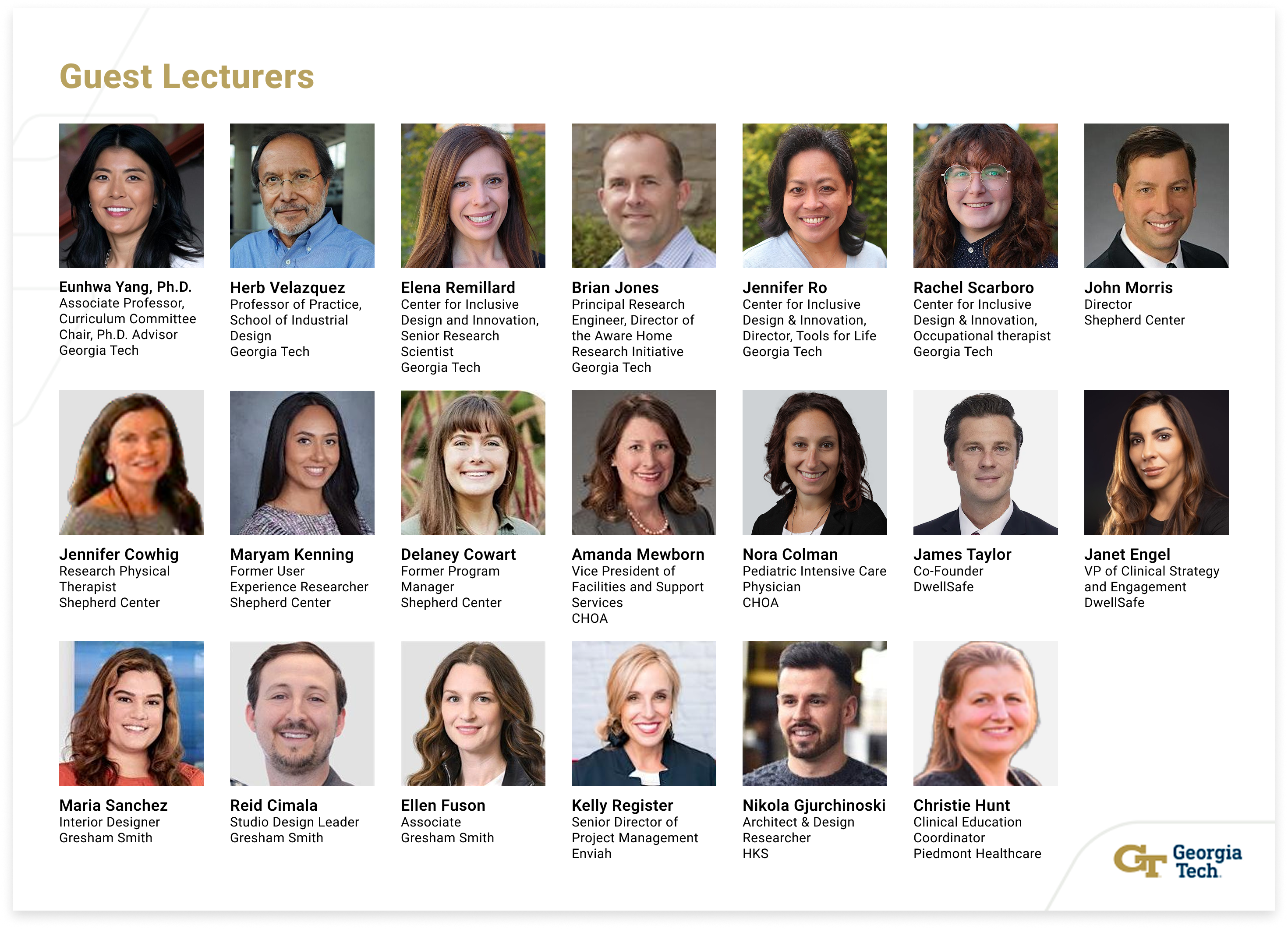
The course was led by Dr. Hui Cai, Professor of the School of Architecture, alongside affiliate faculty David Cowan, MSHS. The team was further guided by Emeritus Dr. Craig Zimring and affiliate faculty Dr. Lorissa MacAllister, CEO of Enviah. Their collective expertise and mentorship were instrumental in shaping a rigorous, collaborative, and impactful learning experience for students across disciplines.

The course also benefited enormously from the contributions of a distinguished group of guest lecturers who brought real-world expertise and perspective into the classroom. These included Eunhwa Yang, Ph.D., Associate Professor and Curriculum Committee Chair from Georgia Tech; Herb Velazquez, Professor of Practice in the School of Industrial Design at Georgia Tech; Elena Remillard, Senior Research Scientist at the Center for Inclusive Design and Innovation at Georgia Tech; Brian Jones, Principal Research Engineer and Director of the Aware Home Research Initiative at Georgia Tech; Jennifer Ro, Director of Tools for Life at the Center for Inclusive Design & Innovation at Georgia Tech; Rachel Scarboro, Occupational Therapist at the Center for Inclusive Design & Innovation at Georgia Tech; John Morris, Director of the Shepherd Center; Jennifer Cowhig, Research Physical Therapist at the Shepherd Center; Maryam Kenning, former User Experience Researcher at the Shepherd Center; Delaney Cowart, former Program Manager at the Shepherd Center; Amanda Mewborn, Vice President of Facilities and Support Services at CHOA; Nora Colman, Pediatric Intensive Care Physician at CHOA; James Taylor, Co-Founder of DwellSafe; Janet Engel, VP of Clinical Strategy and Engagement at DwellSafe; Maria Sanchez, Interior Designer at Gresham Smith; Reid Cimala, Studio Design Leader at Gresham Smith; Ellen Fuson, Associate at Gresham Smith; Kelly Register, Senior Director of Project Management at Enviah; Nikola Gjurchinoski, Architect & Design Researcher at HKS; and Christie Hunt, Clinical Education Coordinator at Piedmont Healthcare. Their generosity in sharing time, knowledge, and professional insight greatly enriched the student experience.
SimTigrate Design Center Faculty and
Ph.D. Student Research Showcase
In addition to the HCDF student showcase, the open house also featured the SimTigrate Design Center Faculty and Ph.D. Student Research Showcase, highlighting ongoing work that advances evidence-based and user-centered design in healthcare environments.
Research: Designing Cognitive-Friendly Kitchen Cabinets Using an Evidence-Based and User-Centered Approach
Study 1: Visual Accessibility Through Open Shelving: Impacts on Cognitive Load, Motivation, Physical Activity, and User Perception in Older Adults with Mild Cognitive Impairment
Ibrahim Bilau, Bonwoo Koo, Esther Fu, Wendy Chau, Hyeokhyen Kwon, Eunhwa Yang
Study 2: Visual Accessibility in a Virtual Kitchen: Effects of Open Shelving on Performance, Cognitive Load, and Experience in Older Adults with and without MCI
Ibrahim Bilau, Stacie Smith, Omobolanle Ogunseiju, Ece Erdogmus, Hui Cai, Bruce Walker, Hyeokhyen Kwon, Eunhwa Yang
Study 3: Co-Designing Adaptive Kitchen Cabinets for Older Adults with Mild Cognitive Impairment: A Participatory Workshop Study with Expert Validation
Ibrahim Bilau, Ngodoo Iye, Omobolanle Ogunseiju, Ece Erdogmus, Hyeokhyen Kwon, Bruce Walker, Hui Cai, Eunhwa Yang
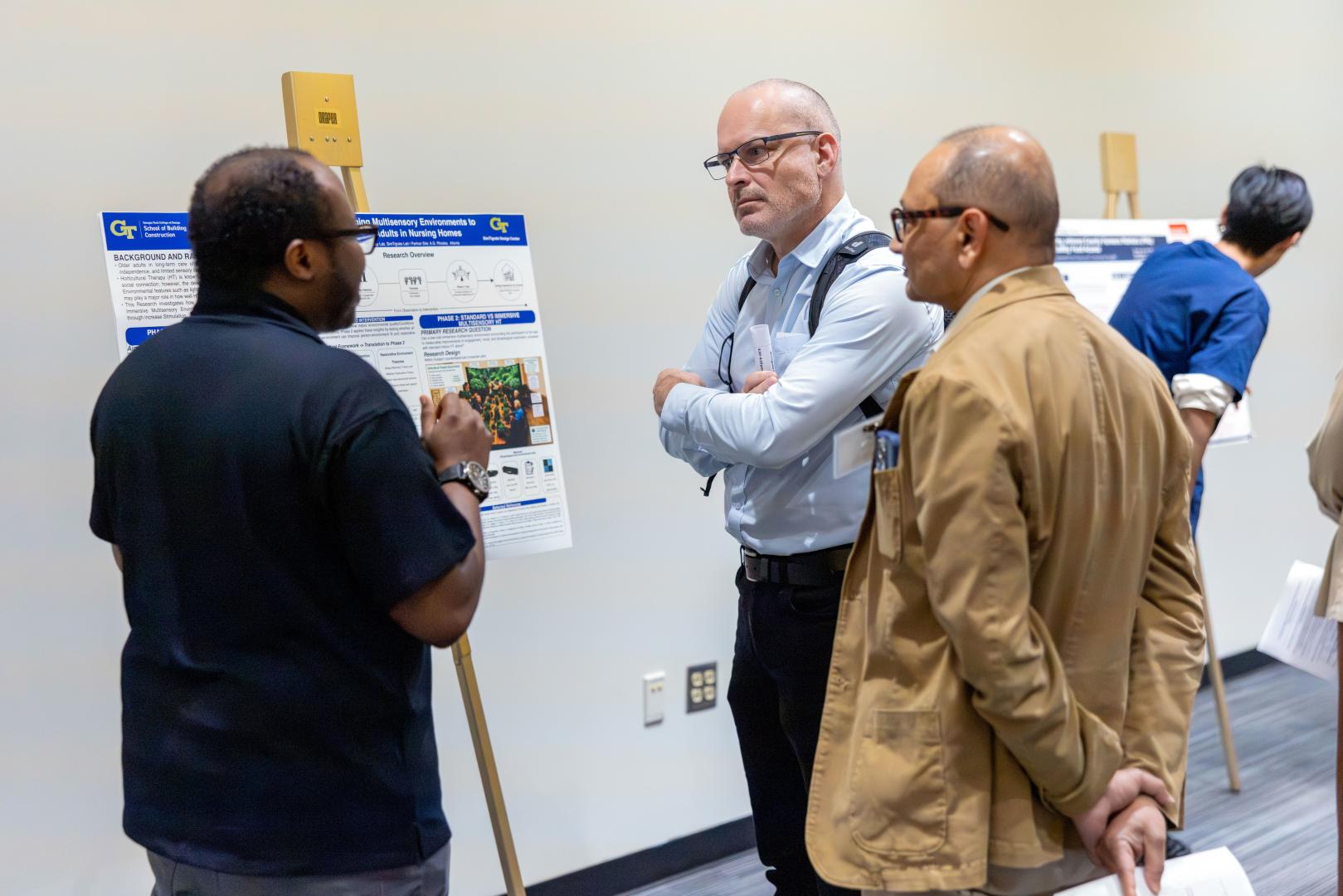
Research: From Observation to Intervention: Designing Multisensory Environments to Support Horticultural Therapy for Older Adults in Nursing Homes
Abdurrahman Baru, Ngodoo J Iye, Alexandra M Lovett, Dina Abdel, Haley M Lorenzo, Armaan Kazi, Haley S Rodriguez, Hui Cai, Leandro Miletto Tonetto, Eunhwa Yang
Research: Wayfinding Performance in Long-Term Care Facilities: The Role of Spatial Configuration
Yasaman Gholami, Yeinn Oh, Margaret Calkins, Rebecca Davis, Hui Cai
Research: Growing Johnson County (JoCo)’s Farmers Markets for Healthy Food Access: Lessons Learned from Data and Community Insights
Yilun Zha, Hui Cai, Herminia Machry, Renee Bryant
Award Announcements
During the open house, SimTigrate also announced several awards recognizing outstanding contributions from both the HCDF and faculty/Ph.D. research showcases.
The Zimring Healthcare Design of the Future Innovation Award was presented to the team behind PLATE: Lauren Callaway (Health Systems), Haitong Li (ARCH), Cooper Stone (Health Systems), and Breno Veiga (ARCH).
The People's Choice Award went to the team behind HomeReady Diagnostics: Tia Johnson (ARCH), Maisie Worley (BMED), Xuanyi Zeng (Operations Research), and Gabriela Parra (ARCH).
The Cowan Healthcare Design of the Future Innovation Award was awarded to the team behind CarePods: Andrea Lopez (BMED), Ainsley Clayton (BMED), Garima Kaushik (ARCH), and So Yeon Lee (ARCH).
Finally, the SimTigrate Design Center Research Award was presented to the team behind Research: Wayfinding Performance in Long-Term Care Facilities: The Role of Spatial Configuration: Yasaman Gholami and Yeinn Oh.
SimTigrate extends sincere gratitude to all instructors, guest lecturers, domain experts, and community partners whose contributions made this showcase possible. Their dedication to advancing health-focused design continues to leave a lasting impression on students' academic journeys and professional futures. As the semester concludes, SimTigrate looks forward to continued collaboration, innovation, and research-driven design in the years ahead.