Where Health
and Design Meet
Our Vision
Use research and simulation to improve medical experience and quality, patient safety and outcomes, and drive innovations.
The SimTigrate Design Center employs research and simulations to facilitate the creation of new methodologies and tools, to innovate and integrate across different disciplines and optimize processes, technology and the built environment holistically, ultimately promoting human health and wellbeing and healthier communities.
Our Story
The SimTigrate Design Lab was officially established in 2012 in the GT College of Design, launching with a 5,000 square foot lab space outfitted with a dedicated mockup space to support hands-on research and innovation. The lab’s creation was the result of visionary discussions that began in 2011, led by Professor Craig Zimring, Research Associate Jennifer DuBose, and two of Dr. Zimring’s students - Ross Westlake (MS. Architecture in Design and Health student) and Lorissa MacAllister (PhD in Architecture student). The shared goal was to amplify the impact of healthcare design and research that had already underway in the College of Design. Building upon the momentum of Professor Zimring’s groundbreaking comprehensive literature review on evidence-based design and his pioneering research with the Robert Wood Johnson Foundation (RWJF) and the Military Health System (MHS), Dr. Ziming brought together a multidisciplinary team of likeminded colleagues - including Erica Ryherd (acoustics), David Cowan(Industrial and Systems Engineering), and Mark Braunstein (Health Informatics) into a group called the Health Environments Research Group or HERG in 2000. HERG provided a platform to foster the collaboration of scholars between Georgia Tech and Emory University who are dedicated to improving healthcare outcomes through the design of cities and buildings.
As the demand for research-driven, evidence-based decision-making in healthcare design projects continued to grow, the SimTigrate Design Lab was officially launched in 2012 to create an interdisciplinary hub that brings together faculty and students across disciplines to develop and apply innovative tools to support better design decisions in healthcare environments. Zimring and Associate Director Jennifer DuBose were instrumental in creating SimTigrate, cultivating a robust and impactful research portfolio through strategic partnerships and collaborations with industry leaders, healthcare systems, and non-profit organizations.
In August 2024, Dr. Hui Cai, a Georgia Tech School of Architecture alumna, joined SimTigrate as the Executive Director, bringing with her a wealth of experience from her roles as Director of Research at the Institute of Health and Wellness Design and Chair of the Department of Architecture at University of Kansas. Dr. Leandro Tonetto from Industrial Design and Dr. Eunhwa Yang from Building Construction joined as Core Faculty Lead, forming a dynamic leadership team to advance Simtigrate’s Mission and shape its future together.
Since then, the faculty team has continued to grow, attracting many affiliate faculty from a wide range of disciplines, including Architecture, Industrial Design, Building Construction, Urban Planning, Health Systems Engineering, and other healthcare professions. Reflecting its dynamic growth and the increasingly trans-disciplinary nature of its work, the lab was officially renamed the SimTigrate Design Center in Fall 2025 by the Dean Ellen Bassett of College of Design.
Inside the SimTigrate Design Center
The 5,000-square-foot SimTigrate Design Center is equipped with a research lab, physical and virtual mock-up testing spaces, and meeting areas to foster transdisciplinary collaboration and rigorous field research. It features dedicated lab space for faculty, undergraduate and graduate research assistants, a conference room, the L[UX] Lab, and a full-scale VR studio.
The L[UX] Lab (Lighting User Experience Lab) is a user experience lab designed to resemble a real hospital patient room. The full-scale room features state-of-the-art medical and lighting equipment to create an environment suitable for evidence-based simulation and research projects. The lab includes multiple types of light fixtures, and their control panels are located in the adjacent observation room, which is part of the L[UX] Lab as well.
Please follow Dr. Hui Cai to take a look inside the SimTigrate Design Center.
Our Approaches
We develop rigorous research and push for design innovations through tools such as our Occupancy Analytics discrete event modeling, business-process modeling, spatial analysis and acoustics modeling, full-scale physical and VR/AR modeling of key healthcare spaces for evaluating room prototypes.
Look for moments of change & impact
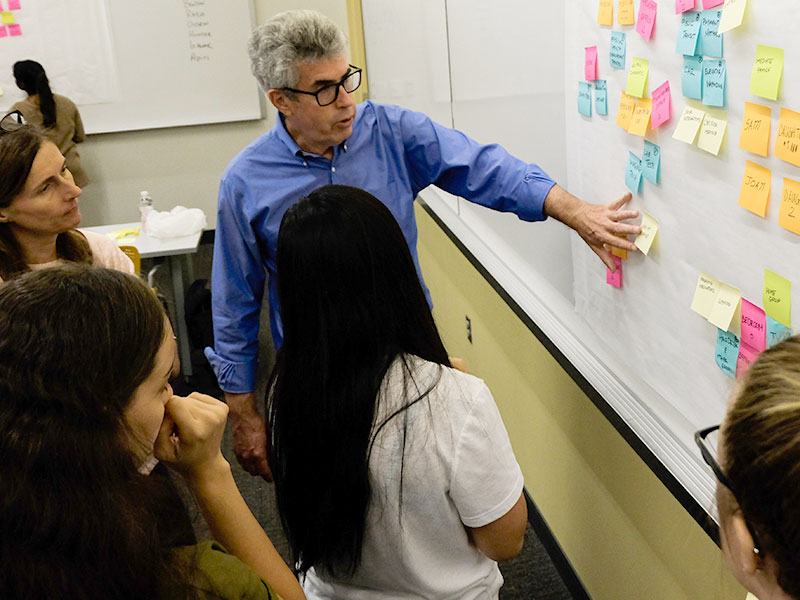
Engage in discovery with stakeholders
Identify relevant evidence
Build long-term trusted relationships with sponsors
Involve students in everything
Research Settings
Our research is conducted in a wide range of settings, including homes, day program spaces, outpatient ambulatory care spaces, acute care spaces, and innovation centers.
Day Program Spaces
Outpatient
- Design for teamwork in outpatient settings
- Exam rooms
- Pediatric clinics
Acute Care
- Med/Surg Patient Rooms
- ICU
- Biocontainment Units
Populations We Serve
Questions?
Contact Us